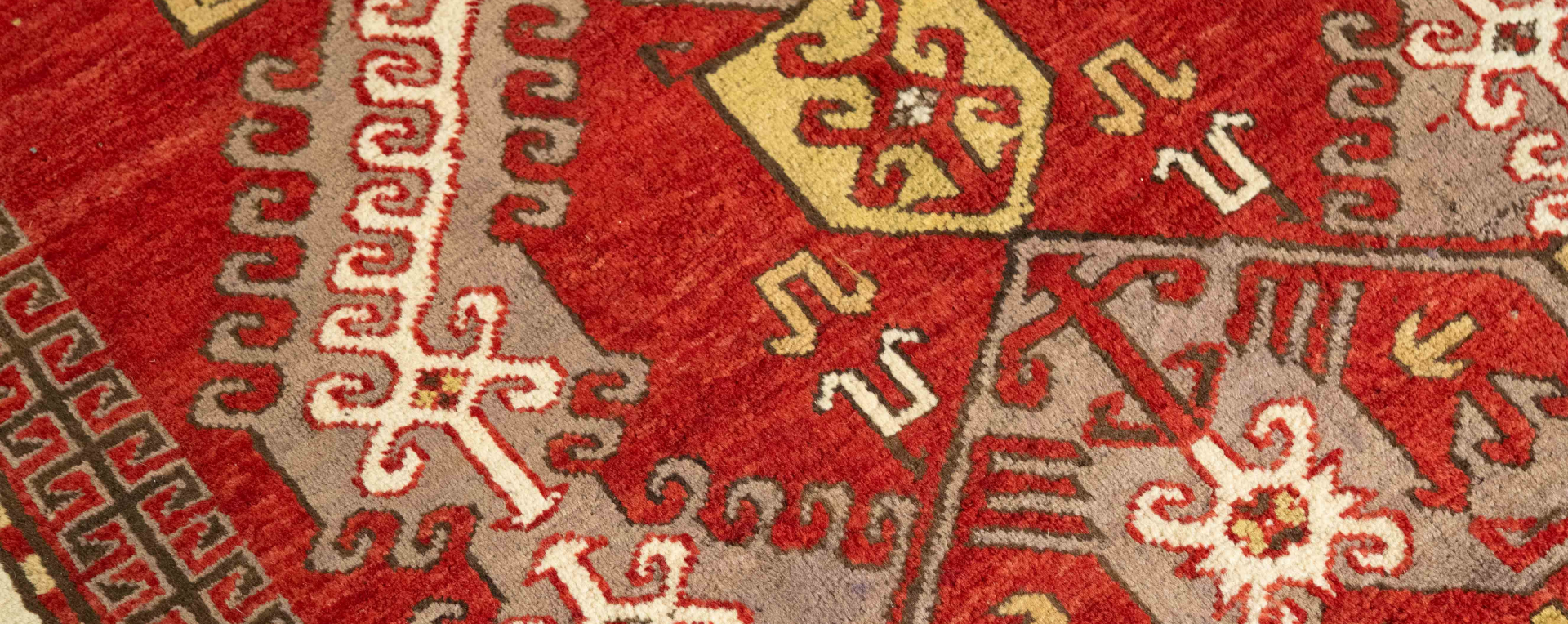
Living room rug care is all about keeping your rug clean, fresh, and in good condition. It requires consistent practices like vacuuming, spot cleaning, and occasional deep cleaning. Proper area rug care helps preserve the rug’s appearance, texture, and lifespan, despite daily foot traffic.
If you’ve recently noticed any dullness, fading, or fraying, chances are you’re guilty of improper rug care. Or you’re making one of many rug cleaning mistakes. How do you avoid these pitfalls and keep your rug looking new? Learn more in this guide to living room rug care.
Four Best Practices for Living Room Rug Care
Rugs have been a precious household commodity for over 2,500 years. It was estimated to have been woven in 500 BC, but is incredibly well-preserved because it was encased in ice.
Now, this isn’t to say that you should cover your carpets in ice, but show you that rugs can last an incredibly long time provided you follow a proper maintenance schedule.
Regular Rug Rotations
If a rug is kept in the same position for too long, its fibers wear down faster. Areas that see particularly high foot traffic start to depress, and wear down faster.
A simple trick to avoid this is to simply move the rug. A rug rotation every few months can help minimize excessive shedding, protect your floors, and even out some of the pressure points on your carpet.
Frequent (and Careful) Vacuuming
Without proper living room rug care, all kinds of dirt and debris build up can give your rug a dull look. But even when the dirt isn’t visible, it’s still hidden in the fibers, posing a danger to you and your loved ones. Rugs are a hotbed for allergens and dander which reduce the air quality in your home and trigger respiratory issues. The best long-term solution for this is a professional rug cleaning for allergy relief.
But until then, make sure you vacuum regularly. The frequency for vacuuming rugs should ideally be once a week, or at the very least once every two weeks. If you live with pets, children, or elderly folk, you should vacuum more often — up to twice a week. Don’t forget to get the floor underneath and avoid damaging delicate carpet fibers.

Using Rug Pads
One way to protect both your rug — and the flooring beneath — is by using a rug pad. These strips of material fit neatly under your rug to prevent slipping, wear-and-tear, and other related issues. A rug pad can also reduce the effects of heavy traffic, as well as compensate for the weight of heavy furniture — two of many reasons why it’s always recommended when looking up how to care for a living room rug.
Avoiding Direct Sunlight
Who doesn’t love a living room with a lot of natural sunlight? Your rug.
While fibers and colors fade at different rates, exposure to direct sunlight accelerates the process significantly. To avoid this, pay attention to how the light enters the room, note its intensity at different times of the day, and adjust the rug accordingly.
How to Clean a Living Room Rug
The actual cleaning process is a lot tricker than everyday living room rug maintenance. When a rug has been stained, or its colors start to fade, you need expert assistance.
One of the biggest mistakes homeowners make is opting for DIY cleaning vs professional rug cleaning. Many DIY solutions are not effective, others are downright bad. Those who don’t follow the “how to clean living room rug” guides make mistakes that create more expensive, harder-to-fix problems.
According to our experts at Thomas Rug Cleaning, improper DIY techniques is one of the most common causes of long-term rug damage. We’ve instead developed a more effective system for how to clean your living room rug. Here’s how it works:
Fully Submerged Deep Wash
All rugs that enter our facility are first dusted to get rid of surface dirt and debris.
They are then gently submerged in water and cleansed with eco-friendly solutions. During this deep rug cleaning process, we flush out deep-set dirt, allergens, bacteria, and unpleasant odors. Unlike DIY methods, this technique protects natural dyes and fibers. No harsh chemicals are used, as many of those fumes can harm children or pets.
Drying Facilities
Once all dirt has been soaked out of the carpet, it is rinsed and sent to a proper drying area. Here it will be given enough time to breathe and for all the moisture to evaporate. This is a really important step that many homeowners skip. Even a slightly damp rug can attract allergens and contribute to the growth of harmful mold and mildew.
Specialized Solutions
Not all rugs are alike. Some have delicate fibers and materials, others are more resistant to wear-and-tear. Each also has its own cleaning considerations.
The process of cleaning wool rugs, for instance, is more time-consuming than for your average synthetic carpet. Similarly, removing stains from Oriental and antique rugs requires extra considerations that only a professional rug cleaner can provide.

Rug Pick-Up and Delivery
For many, the biggest hurdle to a proper maintenance schedule is a lack of time. Not everyone has the luxury of conducting a fully submerged deep wash at home, or packing and moving the rug to a facility every couple of months. That’s why we offer a convenient rug pickup and delivery in Los Angeles.
How Often Should I Clean Living Room Rug?
Rugs need constant attention. Homeowners should vacuum their carpets at least once a week, along with other precautions like regular rotations. The experts at Thomas Rug Cleaning say the best results show when a carpet is professionally deep cleaned at least once every 12-18 months. This frequency can be adjusted depending on the type of material, or any special health considerations.
Frequently Asked Questions
Can you clean a living room rug at home safely?
While spot cleaning and proper vacuuming are perfectly safe ways to maintain a rug, we do not recommend you try out any DIY cleaning hacks. Only a professional can properly get stains and dirt out of your rug without damaging its delicate fibers.
Is steam cleaning safe for living room rugs?
Steam cleaning is not recommended for most living room rug materials — including wool, silk, viscose, and more. The heat does irreparable damage to the natural fibers, significantly reducing the lifespan of your rug.
How do you keep a living room rug looking new for years?
A mix of regular vacuuming, rug rotations, and proper storage can help maintain your rug’s natural glow. Remember to use a rug pad for extra protection, and book an appointment for a professional deep clean at least once every 12-18 months.
How Thomas Rug Cleaning Make Living Room Rug Care Easy
Regular vacuuming, rug rotations, and rug pads can help extend the lifespan of your carpet. But if you’re looking for more comprehensive living room rug care, or a premium rug cleaning in Los Angeles, get in touch with us instead.
Our team of experts can help you remove stains from a rug, restore its colors, prevent long-term wear-and-tear — essentially, giving it a new lease on life. Learn how to care for living room rugs the right way with Thomas Rug Cleaning Co.